
gRPC and protobuf
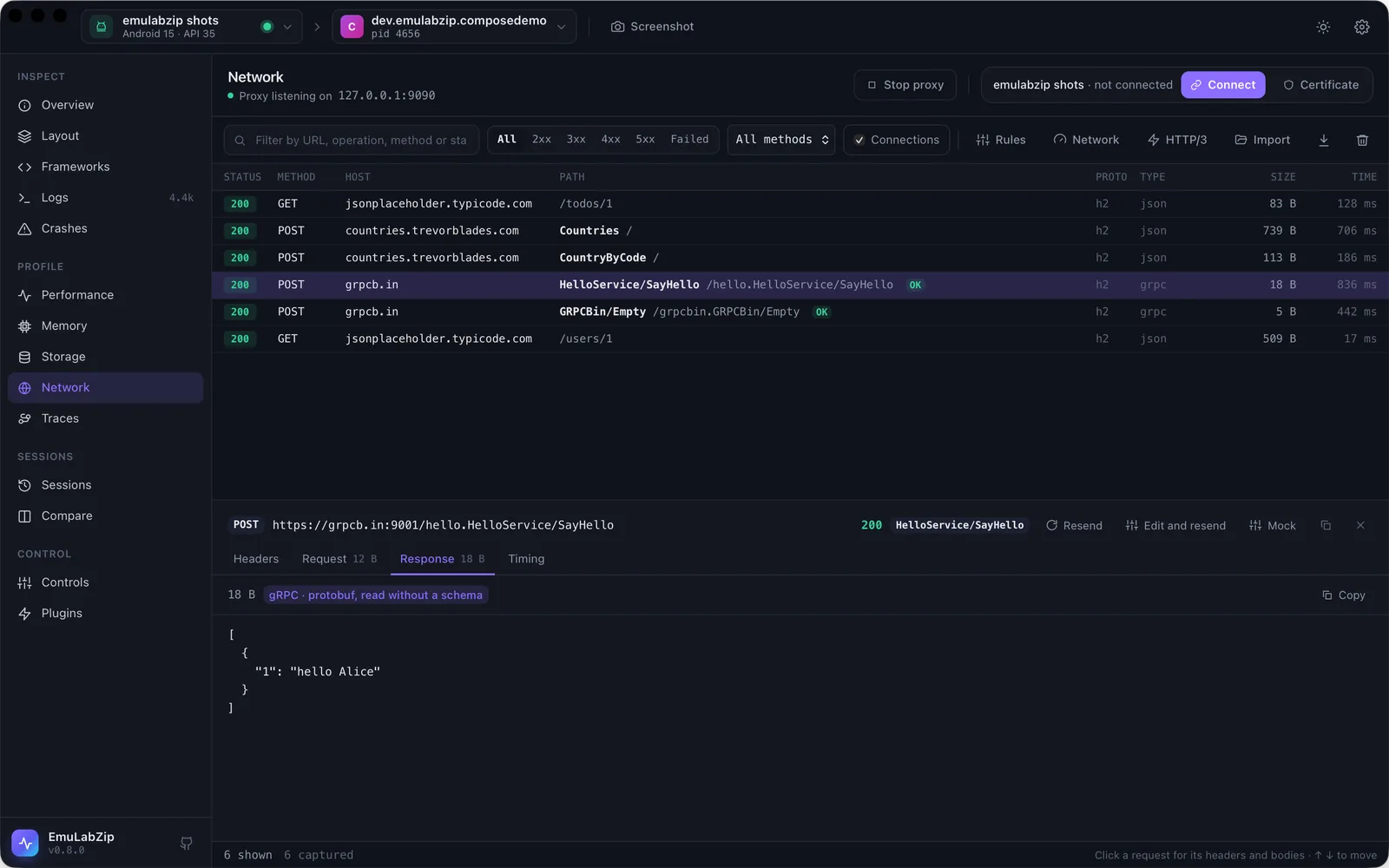
gRPC calls are shown in Network by the method they call, with the status the server answered.
- The Operation column shows
Service/Method, taken from the path. - gRPC says how a call ended in trailers, headers sent after the body (
grpc-status,grpc-message). They are recorded and shown in the Headers tab, and the status shows in the list asOK,UNAVAILABLE,NOT_FOUND… - Calls are streamed through the proxy as they happen, so streaming calls work, and a long call shows its messages as they come. A request breakpoint cannot hold a gRPC call, because it needs the whole message. Rules can still delay, block or answer it.
- Only gRPC over TLS (HTTP/2 negotiated by ALPN) is decrypted, like all HTTPS. Cleartext HTTP/2 (
h2c) is not supported.
Reading the messages#
A gRPC body is a series of messages, each protobuf. The Request and Response tabs list them as JSON, in one of two ways:
- Without a schema. Protobuf on the wire has field numbers, not names. EmuLabZip reads them anyway:
{"1": "hello", "2": 150, "3": {"1": 5}}. Text is shown as text, a nested message as an object, a repeated field as a list, and other bytes as hex. A message that is not protobuf says so. - With your
.protofiles. In Network → Network → gRPC and protobuf, choose the folder that holds them (the oneimportpaths are relative to). They are compiled in memory, with noprotocneeded. The call's method then says which message types its request and response are, and the messages are shown as protobuf's JSON, with the real field names. A message that does not fit its type falls back to the reading without a schema.
Messages compressed with grpc-encoding: gzip are unpacked.